


























'/%3E%3Cpath%20fill='%23b2b2b2'%20d='M241%20382q0%2016%2017%2026%2017%2011%2042%2011t42-11q16-11%2017-26V269H241'/%3E%3Cpath%20fill='%239f7e00'%20d='M241%20379q0%2014%208%2023%209%209%2021%209%2014%200%2021-9%209-9%209-23V269h-59'/%3E%3Cpath%20d='M241%20339v-70h59v110q0%2014-9%2023l-6%205v-68h-15v72q-8%200-14-4v-68zm59%2040c0%2022%2015%2032%2029%2032%2021%200%2030-18%2030-32v-40h-59'/%3E%3Cpath%20fill='%239f7e00'%20d='M266%20277v5h2v12h-3v-5h2v-5h-9v5h2v5h-4v9h3v18h-5v10h34v-10h-5v-18h3v-9h-4v-5h2v-5h-9v5h2v5h-3v-12h2v-5zm42%20101q0%2010%206%2017%206%206%2015%207%2010-1%2016-7%206-7%206-17v-29h-43'/%3E%3Ccircle%20fill='%230044ad'%20cx='329.5'%20cy='372'%20r='6'/%3E%3Cellipse%20fill='%230044ad'%20cx='300'%20cy='340'%20rx='16'%20ry='21'/%3E%3C/svg%3E)
The diagnosis every food manufacturing company needs to read before taking the next step
There’s a moment in the life of every food company that’s doing well: the moment when growth starts to hurt.
Orders increase. The team grows. Customers demand more. And at some point, the owner or manager realizes they no longer control what they used to control. Not because they’re less capable. But because the tools they started with — the spreadsheets, WhatsApp groups, basic accounting system — are no longer enough to sustain the operation they have today.
What used to be a manageable business has become a machine with too many parts that no one sees completely.
That moment isn’t a failure. It’s a signal. And what happens in that moment defines whether the company continues growing or starts crumbling from the inside while outwardly appearing to be doing well.
About CeleriTech: We are a SAP Gold Partner based in Miami, Florida, specializing in digital transformation for food manufacturing companies in the United States and Latin America. We’ve been implementing SAP Business One for food industry SMEs for over twenty years — and this article summarizes the problems we see over and over again before they call us.
The Problems No One Names, But Everyone Lives
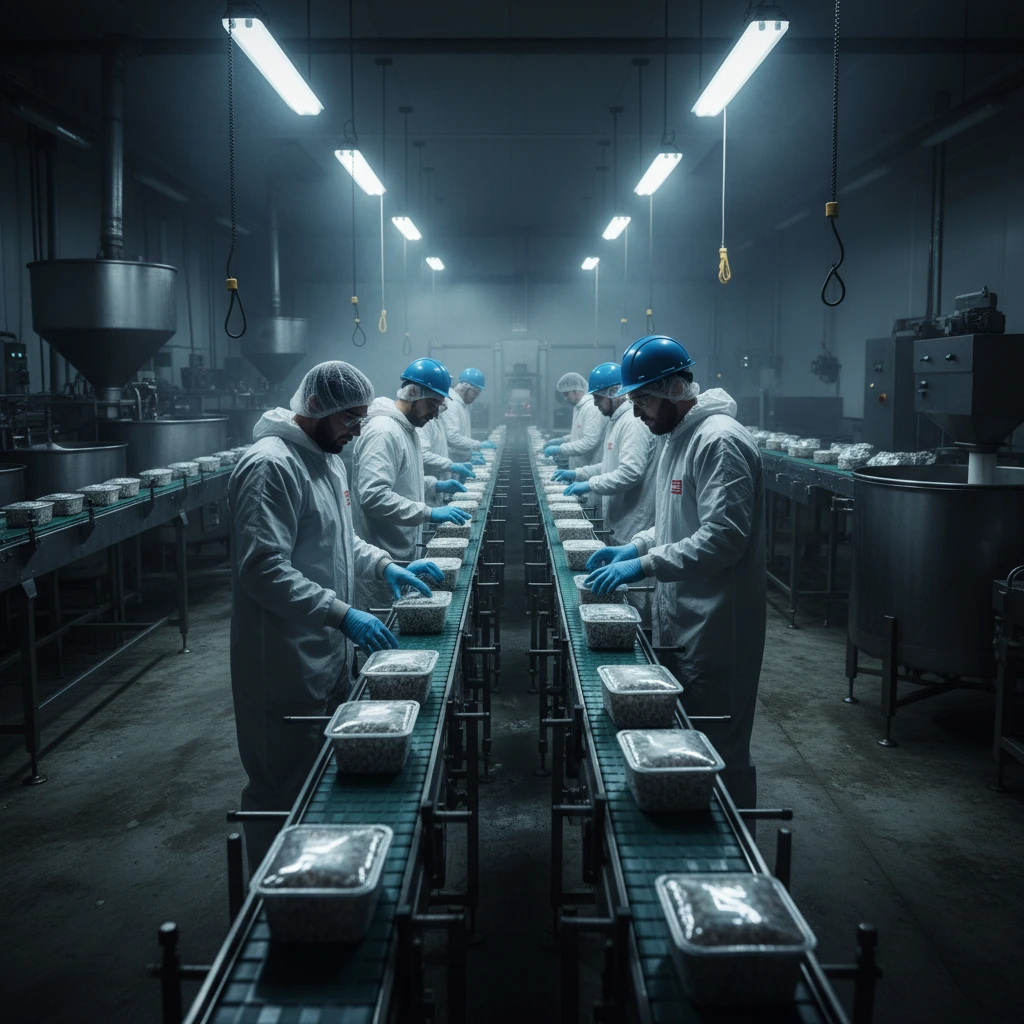
In more than two decades implementing SAP Business One for food manufacturing companies in Miami, Florida, and markets like Dominican Republic, Venezuela, Colombia, and Mexico, we’ve seen the same pattern repeat regardless of size, country, or product.
Imprecise Product Costing
They don’t know how much it really costs to produce what they sell. Recipe costs change with every raw material purchase. Waste varies by shift, by operator, by season. Indirect costs — energy, refrigeration, labor — are rarely distributed well among products. Result: companies that price based on assumptions and discover too late that some of their best-selling products are their least profitable ones.
Intuitive Raw Material Purchasing
They buy raw materials by intuition, not data. Without real inventory visibility and no connection between production plans and purchase orders, companies oscillate between two equally costly extremes: overbuying perishables that end up in the trash, or running short and stopping a production line at the worst possible moment.
Retrospective Efficiency Measurement
They measure operational efficiency in hindsight, if they measure it at all. How long did it really take to produce that batch? Which shift has better performance? Where are most kilos lost? In most companies we know, these questions are answered with estimates, not data. And what isn’t measured precisely can’t be improved intentionally.
Traceability Archaeology
Traceability is an archaeological exercise. In food manufacturing, knowing which lot of which ingredient reached which customer isn’t optional — it’s regulatory. When there’s a quality problem or health alert, companies without digital traceability spend days reviewing papers to reconstruct what should be a click away.
“My food plant is growing but inventory counts are always off—manual logs are killing us, waste is 20% higher than it should be.” — Reddit user on r/manufacturing
Production by Habit, Not Real Demand
They produce by habit, not actual demand. Without connection between real sales, available inventory, and production plans, companies manufacture what they’ve always manufactured. Promotions catch them by surprise. Demand spikes overwhelm them. Slow seasons leave them with inventory that doesn’t rotate.
Late Financial Closes Generate More Questions Than Answers
The real cost of sales is known weeks after the month closed. Profitability by product, by customer, or by channel is a conversation no one can have with reliable data.
Physical Inventory Doesn’t Match the System
Without point-of-movement capture — barcodes, scanners, labels — every warehouse movement depends on someone registering it manually and correctly. Bad data contaminates everything that comes after.
The Pattern Behind All These Problems

Each of these problems has its own name and specific solution. But they all share one root: the absence of a reliable, integrated, real-time operational database.
Without that foundation, each area of the company works with its own version of the truth. Purchasing doesn’t see what production sees. Finance doesn’t see what the warehouse sees. The manager makes decisions based on information that’s already old when it reaches their hands.
Case in point: Growing without that foundation doesn’t solve problems — it amplifies them. More volume with the same bad data generates more losses, more errors, more friction. Growth that should be the solution becomes the accelerator of the problem.
Why This Matters More Than Ever

The FDA in the United States has published its blueprint for food supply chain modernization, demanding end-to-end digital traceability for food producers. Consumers demand origin transparency. Retailers demand electronic integration. Digital markets open new channels that traditional operations can’t sustain.
Food and beverage manufacturing companies in Florida, Texas, and Latin America that reach that future with reliable data and integrated processes will be able to leverage artificial intelligence and analytics as real advantages. Those that arrive with the same old Excel sheets will find that new technology can’t be built on a broken foundation.
Pro tip: The ERP isn’t the destination. It’s the solid foundation from which everything that comes next is built.
What Comes Next
In the upcoming articles of this saga, we’ll break down each of these problems in detail — what causes them, how they manifest in daily operations, and what needs to be in place to truly solve them.
Without selling technology. With the same direct conversation we’ve had with our clients for over twenty years.
→ Next: You’re pricing on assumptions — product costing and BOM in food manufacturing
Frequently Asked Questions
What are the main operational problems of a growing food manufacturing company?
The most common are imprecise product costing, raw material purchasing without MRP, lack of operational efficiency measurement, manual batch traceability, disconnection between sales and production, and late financial closes. They all share one root: absence of integrated real-time data. CeleriTech, SAP Gold Partner in Miami, solves these problems for food manufacturing SMEs in the United States and Latin America with SAP Business One.
Why does growth worsen operational problems in food manufacturing companies?
Because growth amplifies existing processes. If data is bad or processes are manual, more volume produces more errors, more losses, and more operational friction. A food company in Miami, Dominican Republic, or Venezuela that grows without a reliable database is growing blindly — accumulating risks that become visible when they’re already difficult to reverse.
What does a food manufacturing company need in order before implementing artificial intelligence or analytics?
An integrated and reliable operational database — typically an ERP like SAP Business One. Artificial intelligence and advanced analytics cannot produce useful results on fragmented, manual, or inconsistent data. The ERP isn’t the destination — it’s the prerequisite for AI, analytics, and automation that comes after.
Ready to Build Your Solid Foundation?
Is your food manufacturing company in Miami, Florida, or Latin America experiencing any of these problems? Let’s talk. At CeleriTech, we’ve spent two decades helping companies like yours build the solid foundation from which to grow with control.
Contact us: 📧 info@celeritech.biz | celeritech.biz