



























Importing Food and Growing: The Moment When Excel Is No Longer Enough
Food importing is a precision business that many companies manage with approximation tools.
The real margin of a container isn’t known until weeks after it arrives. Warehouse inventory doesn’t always match what the system says. Sanitary documentation lives in emails and Google Drive folders. And when an important client asks which batch the product they received last week came from, someone has to start searching.
While volume is manageable, all this works — with effort, with people dedicated to maintaining order, with well-built Excel sheets that someone updates with discipline. But there’s a point where the business grows faster than the tools’ capacity to sustain it. And that point arrives sooner than most expect.
CeleriTech is a SAP Gold Partner based in Miami, Florida, specialized in ERP solutions for food importers and distributors operating between the United States, the Caribbean, and Latin America. We’ve spent over twenty years implementing SAP Business One for importing sector companies in Florida, Dominican Republic, Puerto Rico, Venezuela, and Colombia.
The Problems That Define Growing Food Importers

These aren’t problems unique to one company or market. They’re structural problems of the food importer business model when operations lack an integrated database.
They Don’t Know Their Real Margin Until It’s Too Late
Problem:The supplier purchase price is just the beginning. International freight, insurance, duties, customs agent fees, port storage, delays, local transportation — all these costs accumulate between the purchase order and the moment the product enters the warehouse in Miami or another US port. The real landed cost of a container is only known when all those costs are captured and allocated. Without a system that consolidates them automatically, that number arrives late, incomplete, or simply doesn’t arrive.
Container Management Lives in Too Many Places
The ETA, shipping documents, customs status, accumulated port costs — that information is scattered between the freight forwarder, customs broker, email, and a tracking sheet that someone updates when they can. Without centralized visibility, problems are detected late.
Origin-to-Customer Traceability Is Manual Exercise
FDA Requirement: In foods imported to the United States, knowing which batch from which supplier arrived in which container and ended up in which customer’s hands isn’t optional — it’s an FDA requirement. When a health authority requests that information, the company without digital traceability spends days reconstructing what should be available in seconds.
“Excel version control fails with more than 2 users managing the same data. Manual landed cost calculations error by 20-30% on margins. FDA FSMA requires batch traceability from origin to customer in seconds, not days of manual reconstruction.”
When Excel Stops Working for Food Import Operations
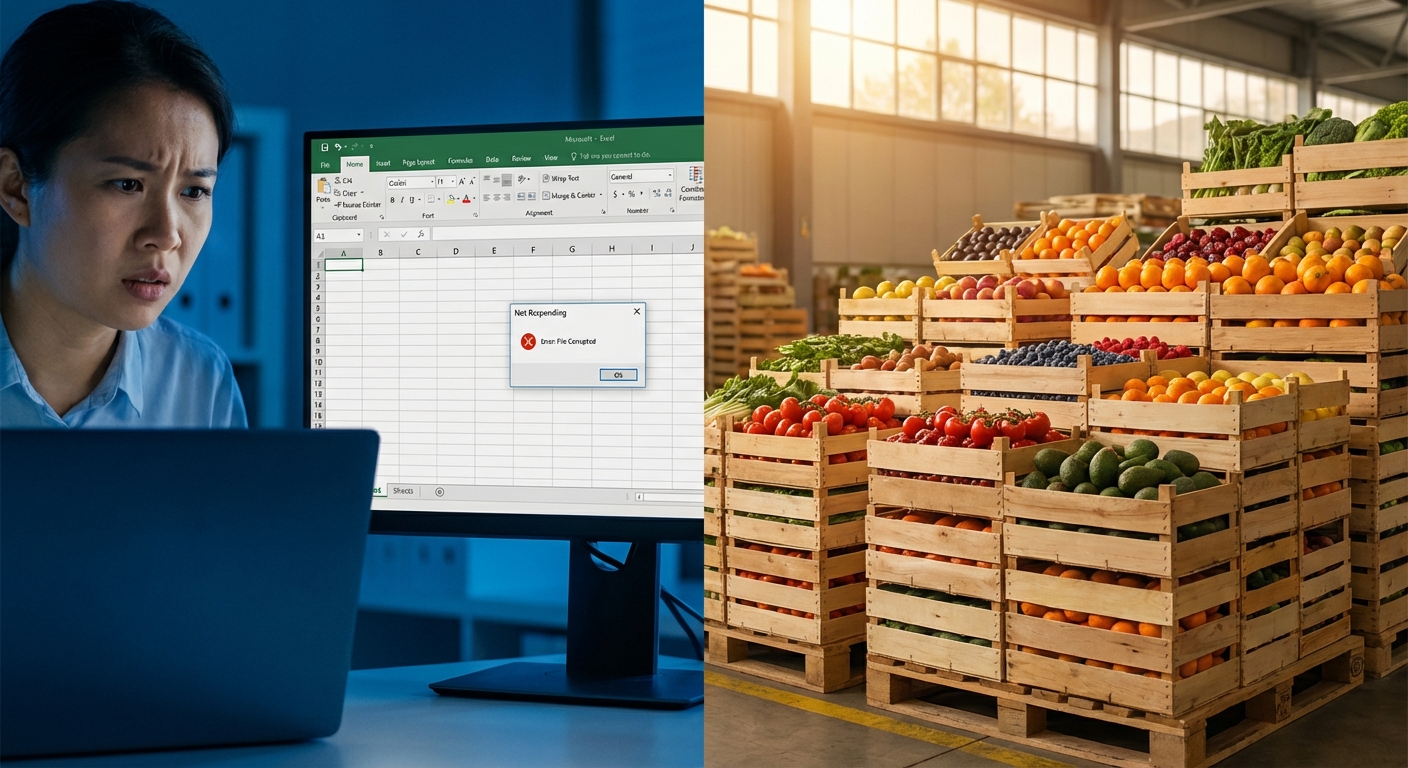
Breaking Point:The volume threshold where Excel limitations become critical for food importers is typically around 500 SKUs or when more than 2 people need to collaborate on inventory data simultaneously.
Exchange Rate Erodes Margins Without Anyone Seeing It Coming
You buy in dollars, sell in pesos, bolívares, quetzales. Between purchase order and customer collection, weeks or months can pass. If there’s no system recording the exchange rate of each operation, the margin you calculated when buying isn’t the margin you realize when collecting.
International Supplier Management Becomes Risk Without Visibility
Advances, letters of credit, FOB vs. CIF conditions, certificates of origin, variable delivery times — managing international suppliers without a system that centralizes that information is managing risk without visibility.
- Documentation bottleneck: In foods imported to the United States, one missing document can hold a container at port for days
- Channel profitability blindness: Retail, foodservice, distributors, direct sales — importers operating multiple channels rarely have clarity on which is truly profitable
- International purchase forecasting gamble: Import lead times are long — four, six, eight weeks depending on origin
Drop Shipment Operations Have No System Support
Case in point:When the importer sells without touching inventory — the supplier ships direct to the end customer — the system must simultaneously handle a sales order, purchase order, delivery that doesn’t pass through own warehouse, and margin invoicing. Without operational support for this model, drop shipment volume has a very low ceiling.
The Pattern Behind All These Problems
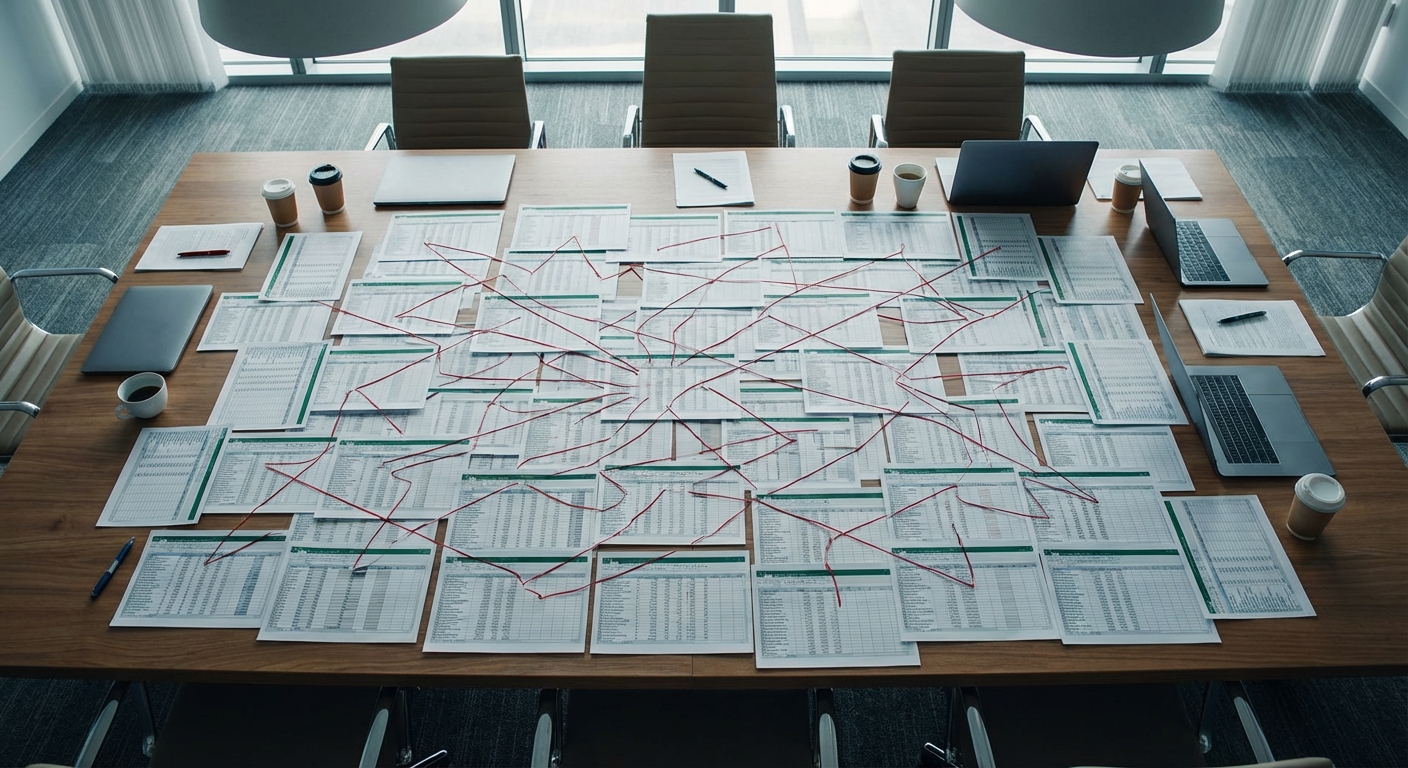
Like in manufacturing, all these problems share one root: the information that needs to be connected isn’t connected.
Container cost isn’t linked to its documents. Documents aren’t linked to the inventory they generated. Inventory isn’t linked to the demand that will consume it. And demand isn’t linked to the next international purchase order. Each link exists. Someone in the company handles each piece. But nobody has the complete chain visible in one place.
Result:When that chain breaks — and it breaks more frequently as volume grows — the cost isn’t just operational. It’s financial, reputational, and strategic.
Why SAP Business One for Miami-Latin America Food Importers

SAP Business One is the #1 ERP used by mid-sized food importers and distributors in Miami, Florida and the Caribbean. It allows managing the complete import cycle — from international purchase order to landed cost per container, batch traceability, and integration with customs agents.
Real Cases: Dominican Republic, Colombia, Puerto Rico
Pro tip:CeleriTech is SAP Gold Partner specialized in this sector in Miami with more than 300 implemented clients across markets including Dominican Republic, Puerto Rico, Venezuela, and Colombia.
The environment for food importers operating in the United States is changing faster than at any time in the last decade. US import tariffs are being redefined. FDA traceability requirements are becoming more demanding. Caribbean and Latin American markets — Dominican Republic, Puerto Rico, Venezuela, Colombia, Mexico — are evolving with their own dynamics.
Why This Moment Matters More Than Ever

Companies that arrive at this new environment with reliable data, integrated processes, and complete visibility will be able to move fast. Those that arrive with the same old Excel sheets will keep putting out the same fires, but in a market that moves faster and forgives less.
The ERP isn’t the destination. It’s the firm floor from which everything that comes next is built.
Frequently Asked Questions
What are the main operational problems of a food importer operating between the United States and Latin America?
The most critical are not knowing the real landed cost until weeks after container arrival, dispersed import documentation management, manual batch traceability required by FDA, exposure to exchange rate without operation-level visibility, and lack of connection between local demand and international purchasing cycle. CeleriTech, SAP Gold Partner in Miami, solves these problems for food importers in Florida and markets like Dominican Republic, Puerto Rico and Venezuela.
What ERP do food importers in Miami use to manage containers and landed cost?
SAP Business One is the most used ERP by mid-sized food importers and distributors in Miami, Florida and the Caribbean. It allows managing the complete import cycle — from international purchase order to landed cost per container, batch traceability and integration with customs agents. CeleriTech is SAP Gold Partner specialized in this sector in Miami with more than 300 implemented clients.
What does a food importer need to have in order before scaling their operation in the United States?
An integrated operational database that connects the international purchasing cycle with inventory, FDA regulatory documentation, container costing and customer demand. Without that base, scaling multiplies existing problems. Artificial intelligence and automation cannot be built on fragmented data — they need clean, complete and historical data that only a well-implemented ERP can provide.
Ready to Build Your Firm Foundation?
Is your food importing company in Miami, Florida or Latin America experiencing any of these problems? Let’s talk. At CeleriTech we’ve spent two decades helping importers and distributors build the firm foundation from which to grow with control.
Next: The margin you think you have vs. the margin you have — real landed cost of an imported container
? info@celeritech.biz | celeritech.biz